
Few phrases show up in Mexican conversation as often as “¡No manches!” The no manches meaning is simple at its core: it’s a reaction like “no way,” “you’re kidding,” or “come on,” depending on the moment. Tone does most of the work, and a single phrase can express shock, joy, annoyance, or disbelief.
This guide explains the no manches meaning in English, where the phrase comes from, how to use it, and when to choose something safer.
What Does “No Manches” Mean?
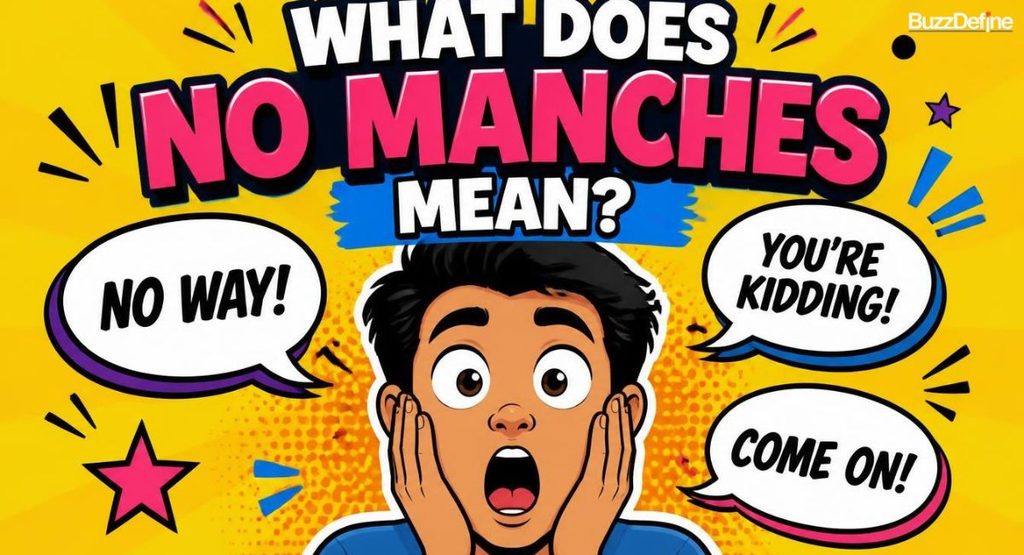
“No manches” is a Mexican slang exclamation used to react to something surprising, unbelievable, or frustrating. It most often translates as “no way,” “you’re kidding,” or “come on.”
It’s a flexible reaction rather than a fixed translation. The situation and your tone of voice decide what it means.
Quick Translations by Emotion
| Emotion or intent | Closest English | Example |
| Surprise | No way! / Wow! | ¡No manches! ¿Ya llegaron? |
| Disbelief | You’re kidding! | No manches, ¿en serio renunció? |
| Frustration | Damn! / Seriously? | ¡No manches! Otra vez se descompuso. |
| Disappointment | Ugh / Oh no | No manches, se canceló el concierto. |
| Excitement | Oh my gosh! | ¡No manches, qué padre! |
| Annoyance | Come on! / Cut it out! | Ya, no manches. |
The Literal Meaning: “Don’t Stain”
Word for word, “no manches” is a command from the verb manchar, “to stain” or “to dirty.” Spanish dictionaries define it as making something dirty or damaging someone’s reputation. Used literally, it’s ordinary Spanish:
- Ten cuidado con la salsa, no manches la camisa. (Careful with the sauce, don’t stain your shirt.)
In everyday slang, though, nobody is thinking about stains. The phrase has become an exclamation.
Where Does “No Manches” Come From?
“No manches” works as a euphemism, a polite stand-in for a stronger phrase. English speakers do the same thing when they say “shoot” instead of a swear word, or “what the heck” instead of something harsher.
In this case, the stronger phrase is “no mames,” which comes from the verb mamar (“to suck”) and is considered crude. Swapping mames for manches keeps the same rhythm and sound while removing the vulgarity. That’s why the two phrases overlap in meaning but not in politeness.
How to Use “No Manches” in Real Conversations
Surprise or Disbelief
This is the most common use. You hear unbelievable news and react.
- ¡No manches! ¿Sacaste el primer lugar?
(No way! You got first place?) - No manches, ¿de verdad vendieron la casa?
(You’re kidding, they really sold the house?)
Frustration or Disappointment
When things go wrong, the phrase works like “ugh” or “seriously?”
- ¡No manches! Se me quedaron las llaves adentro.
(Damn! I left my keys inside.) - No manches, hay tráfico otra vez.
(Seriously, there’s traffic again.)
Excitement and Emphasis
It isn’t only negative. It can amplify good news or a great experience.
- ¡No manches, qué increíble está este lugar!
(Oh my gosh, this place is incredible!)
Telling Someone to Stop
Paired with ya, it becomes “cut it out” or “enough already.”
- Ya, no manches, deja de molestarme.
(Come on, stop bugging me.) - ¡Ya, wey, no manches!
(Cut it out, dude!)
Showing You’re Listening
In conversation, a short, drawn-out “no manches…” tells the speaker you’re following and feeling their story.
- —Perdimos el vuelo por cinco minutos.
—No manches…
—Sí, qué coraje.
Here it means something like “oh man,” a sympathetic noise rather than a question.
How to Pronounce “No Manches”
Say it “noh MAHN-chess.” Stress the MAHN, pronounce the ch as in “cheese,” and end with a soft s. In fast speech it often sounds like “no-MAN-ches” with the words blended.
Does Tone Change the Meaning?
Completely. The same two words can mean opposite things:
- Stretched out (“no maaanches”): playful disbelief or amazement.
- Short and flat (“no manches.”): real irritation.
- Rising pitch: a question, as in “are you serious?”
- Whispered or soft: sympathy or shock.
When you hear it, listen to the delivery before deciding how the person feels.
Is “No Manches” a Bad Word?
No. It’s slang, not a swear word. Because it’s a softened version of a stronger phrase, it’s accepted among family, friends, coworkers, and people of different ages in casual settings.
That said, it’s informal. Skip it in formal emails, presentations, interviews, or with someone you need to show deep respect. In those situations, a neutral phrase like ¿De verdad? or No puede ser is safer.
No Manches vs. No Mames
Both phrases express surprise or disbelief, but they sit on different rungs of politeness.
| No manches | No mames | |
| Tone | Casual, friendly | Crude, vulgar |
| Safe with strangers? | Usually yes | No |
| At work? | Only in a relaxed setting | Avoid |
| With family? | Often fine | Risky |
| Best for learners | Yes | Only after hearing close friends use it |
A good rule for strong slang is to follow, not lead. Use “no mames” only after the people around you have started using it with you. When you’re unsure, “no manches” is the safer choice.
Other Ways to Say “No Manches”
If you want a softer or more formal option, move down this ladder:
| Phrase | Feel | Meaning |
| No mames | Strong, crude | No way (use with caution) |
| No manches | Casual, everyday | No way / you’re kidding |
| No inventes | Softer slang | Don’t make things up |
| ¡No me digas! | Neutral | You don’t say! |
| ¿En serio? | Neutral | Really? |
| ¡No puede ser! | Neutral | It can’t be! |
| ¡Ya basta! | Firm, standard | That’s enough! |
| ¡Anda ya! | Spain only | Come on! (skeptical) |
Does “No Manches” Work Outside Mexico?
It’s strongly associated with Mexico, and people elsewhere will usually understand it from movies, music, and social media. Still, it can sound out of place in other Spanish-speaking countries, where locals have their own slang. In Spain, for example, people might say “¡Anda ya!” to show disbelief. If you’re not in Mexico or talking with Mexicans, a neutral phrase is the better pick.
Common Mistakes Learners Make
- Translating it word for word. “Don’t stain” makes no sense when someone tells you big news.
- Using it in formal settings. It’s casual by nature.
- Copying the stronger version too early. Learn “no manches” first and let “no mames” wait.
- Ignoring tone. Flat delivery can sound annoyed even when you mean surprise.
- Overusing it. One well-placed “no manches” lands better than five in a row.
FAQs
What does “no manches” mean in English?
It usually means “no way,” “you’re kidding,” or “come on,” depending on tone and context.
Is “no manches” rude?
No. It’s informal slang and much milder than “no mames.”
What does “no manches” literally mean?
Literally, it means “don’t stain,” from the verb manchar.
Can I use “no manches” at work?
Only in a relaxed, friendly workplace and with colleagues who speak casually. For formal settings, use ¿De verdad? or No puede ser.
What is the difference between “no manches” and “no mames”?
Both express disbelief or surprise, but “no mames” is vulgar and best kept for close friends, while “no manches” is the everyday, safer option.
Can “no manches” be positive?
Yes. It can express excitement or admiration, like “no way, that’s amazing!”
What does “no manches, wey” mean?
It means roughly “no way, dude.” Wey (or güey) is casual slang for “dude” or “buddy,” so use it only with friends.
Conclusion
The no manches meaning comes down to this: it’s a flexible, friendly Mexican exclamation for surprise, disbelief, frustration, excitement, or “cut it out,” and your tone decides which. It’s mild enough for most casual conversations, which makes it the right slang phrase for learners to pick up first.
Once you understand the no manches meaning, you can react more naturally, follow the stories you hear, and choose the right level of slang for each situation. Start with “no manches,” listen to how native speakers deliver it, and let stronger phrases wait until people around you use them first.
Read Next: Cold Feet Meaning: Idiom Definition, Origin, Examples, and Physical Causes

Muhammad Kaleem is the founder and lead writer at BuzzDefine, where he covers internet slang, texting abbreviations, and digital communication trends. He actively follows how language evolves across WhatsApp, Instagram, and TikTok — tracking real conversations, group chats, and comment threads to keep definitions accurate and current. He writes to make modern slang easy to understand for readers of every generation.







1 thought on “No Manches Meaning: What It Means and How to Use It”