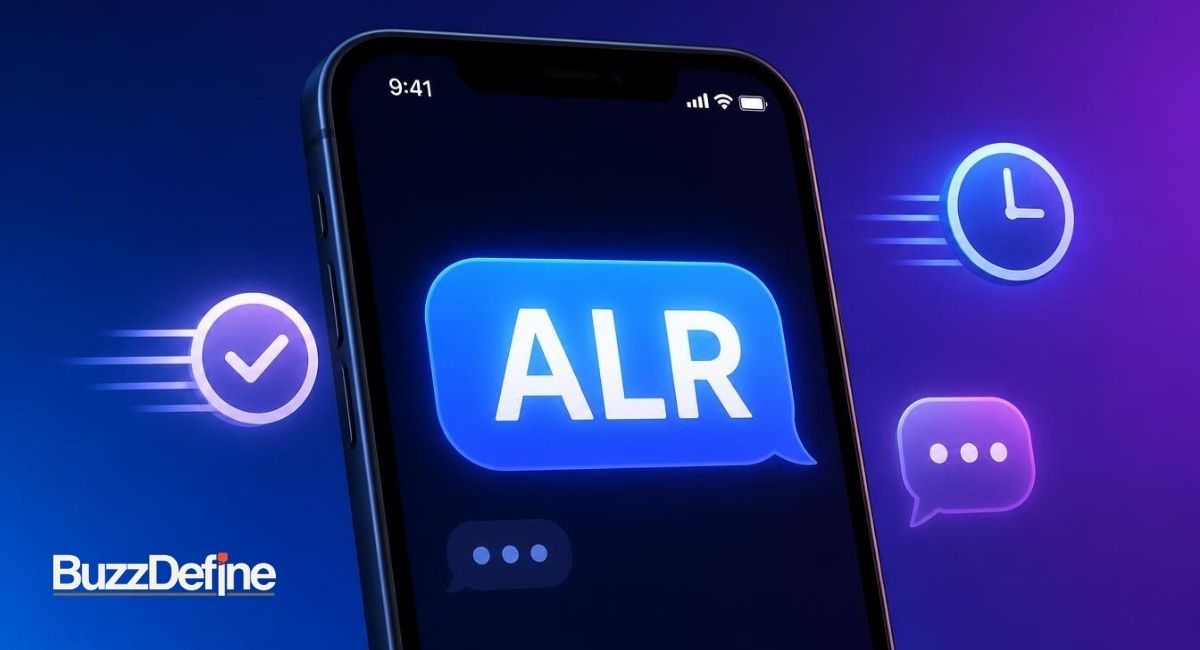
You text your friend, they reply “ALR” and you’re left wondering if that’s a yes, a shrug, or mild annoyance. You’re not overthinking it. If you’re searching what ALR means in text, one short word carries a lot of weight in texting, and it’s one of the most common ones people get stuck on.
ALR mean in text? It stands for “Alright.” It’s a fast, casual way to say okay, agreed, or understood. People use it in texts, DMs, and group chats on WhatsApp, Instagram, Snapchat, and TikTok when they want to reply quickly without typing a full sentence.
Here’s what you’ll get in this guide: the real meaning of ALR, where it came from, how to say it out loud, how its tone shifts depending on context, and, the part most guides skip, exactly how to reply when someone sends it to you.
What Does ALR Mean? (Simple Definition)
ALR means “Alright.“ It’s a shortened way to agree, confirm, or accept something in a text.
People use it as a quick swap for:
- Okay
- Fine
- Sure
- Got it
- Understood
Example: “Meet at 5?” “ALR.” That’s it. No extra explanation needed.
ALR Pronunciation: How Do You Say It?
Most people don’t say ALR out loud. It’s a written shortcut, not a spoken word.
If you do say it, there are two common ways:
- Letter by letter: “ay el are” (like spelling it out)
- As a mumbled word: said quickly like a shortened “alright,” almost dropping the middle sounds
In real speech, people usually just say “alright” or “aight.” ALR stays on screen.
Where Did ALR Come From? (Origin & History)
ALR grew out of early SMS texting, when phones had tiny keypads and messages were capped at 160 characters. Typing fast meant cutting words down.
Here’s how it evolved:
- 2000s SMS era: character limits forced short forms like “u,” “thx,” and “alr”
- 2010s messaging apps: WhatsApp, Snapchat, and Instagram DMs kept the habit alive, even without character limits
- 2020s and beyond: TikTok comments, Discord, and gaming chats made ALR a default reply, driven by speed rather than necessity
The limits disappeared. The habit didn’t.
How to Use ALR in a Sentence (Real Examples)
[Casual agreement] A: “Meet at 5?” B: “ALR.”
[Ending a chat] A: “I’ll talk later.” B: “ALR, talk soon.”
[Acknowledging info] A: “I sent the file.” B: “ALR, got it.”
[Making plans] A: “Movie tonight?” B: “ALR, what time?”
[Parent to teen] Mom: “Be home before 9.” Teen: “ALR.”
[Group chat] Friend 1: “Let’s wear black shirts.” Friend 2: “ALR.” Friend 3: “ALR bet.”
[Gaming chat] Player 1: “Defend left side.” Player 2: “ALR.”
[Slightly annoyed] A: “Fine, do whatever you want.” B: “ALR.”
Does ALR’s Meaning Change With Tone? (Reading the Room)
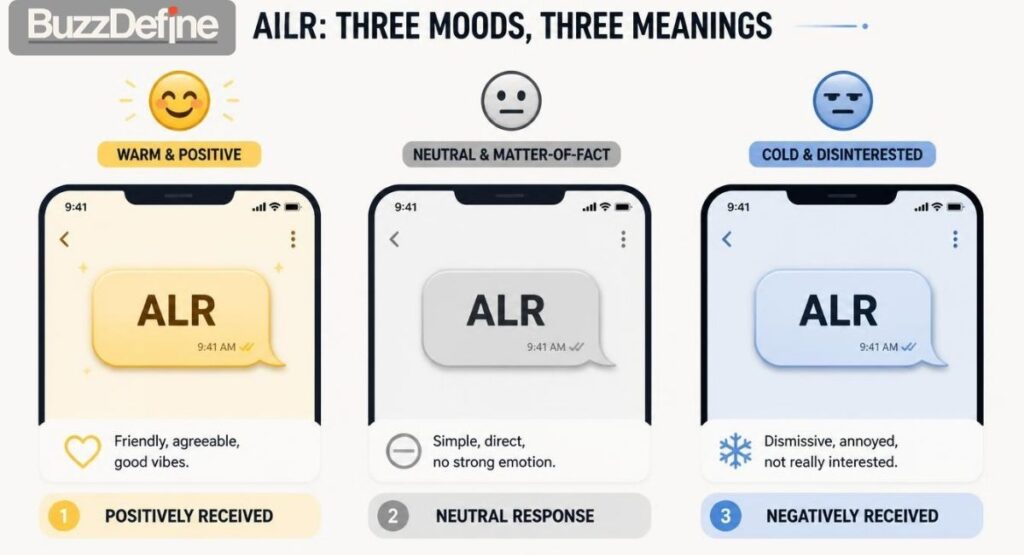
Yes. ALR keeps the same meaning, but the tone behind it shifts based on context.
| Message | Likely Tone | What It Means |
| “ALR, sounds good!” | Warm | Happy to agree |
| “ALR” | Neutral | Simple acknowledgment |
| “ALR.” (with a period, no follow up) | Annoyed | Reluctant agreement |
| “ALR then.” | Dismissive | Shutting the topic down |
| “Oh ALR, sure.” | Sarcastic | Doesn’t actually agree |
Emojis and punctuation change the read even more:
| Version | Feels Like |
| ALR 😂 | Playful, joking |
| ALR. | Flat, possibly annoyed |
| ALR! | Excited, enthusiastic |
| ALR 👍 | Confirmed, no issues |
When in doubt, look at the message before it. ALR rarely stands alone in meaning.
How to Reply to “ALR” (The Part Most Guides Skip)
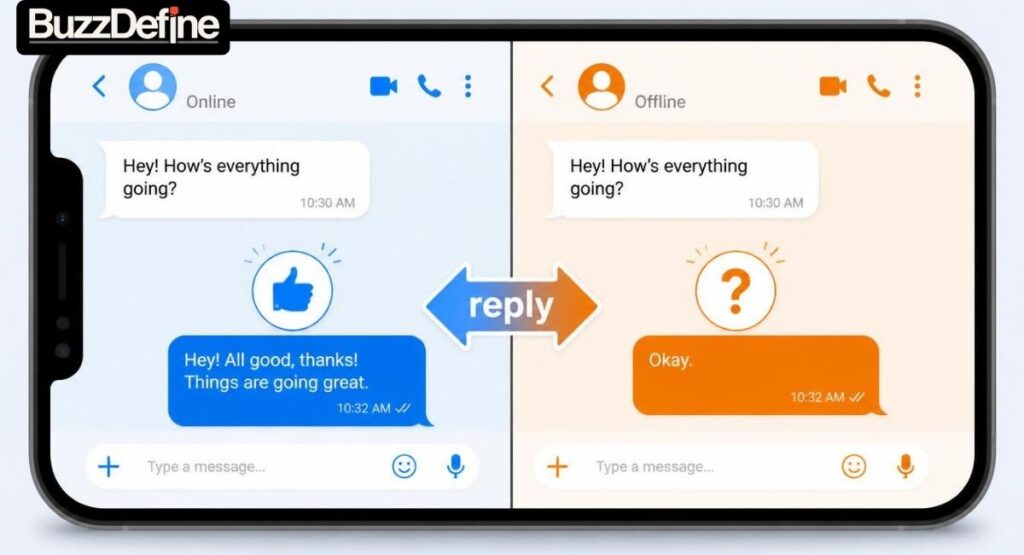
How you reply depends on the tone behind their ALR, not the word itself.
If they seem happy or relaxed: Match the energy. Keep it light.
- “ALR bet, see you then!”
- “ALR cool, let’s do it.”
If they seem short or slightly annoyed: Don’t push. A quick check in works better than over explaining.
- “ALR, all good?”
- “ALR, lmk if you change your mind.”
If it’s ending the conversation: Close it naturally instead of forcing more chat.
- “ALR, talk later!”
- “ALR, catch you tomorrow.”
Ready to copy templates:
- “ALR sounds good, see you at [time].”
- “ALR no worries, let me know if that changes.”
- “ALR, appreciate you telling me.”
- “ALR, talk soon.”
If you’re unsure of their tone, ask directly. A simple “you good?” clears up more confusion than guessing.
ALR vs Similar Texting Terms (Comparison Table)
ALR isn’t the only short form for “okay.” Here’s how it stacks up against the others.
| Term | Meaning | Tone | Formal? | Best Used For |
| Alright | Okay | Neutral to warm | Yes | Any context |
| ALR | Okay | Casual | No | Texting friends |
| OK | Okay | Neutral | Semi | General replies |
| K | Okay | Blunt, often cold | No | Rarely, often reads rude |
| Aight | Okay | Spoken slang | No | Voice style texting |
| Fr / Ard | Okay, agreed | Very casual (Gen Z) | No | Group chats, gaming |
Quick takeaway: ALR feels casual but friendly. K often feels cold or dismissive. Alright is the safest choice when tone matters.
Is ALR Rude or Dismissive?
No, ALR isn’t rude by default. It only reads that way depending on punctuation, timing, and what came before it.
Green flags (usually friendly):
- “ALR, sounds good!”
- “ALR 👍”
- ALR followed by more conversation
Red flags (may signal annoyance):
- Just “ALR.” with nothing else
- ALR sent after a longer message from you
- ALR followed by silence
Context always wins over the word itself. The same “ALR” can mean two completely different things depending on who sent it and what happened right before.
ALR ≠ “Already”: Clearing the Confusion
ALR does not mean “already.” These two words look similar but mean completely different things.
- “I alr did it” is confusing and unclear
- “I already did it” is the correct way to say it
If someone means “already,” they’ll usually type it out or use “alr” only by typo, not intentionally. In everyday texting, ALR almost always means “alright.”
When you’re unsure, check the sentence. “Already” refers to timing. “Alright” (ALR) refers to agreement.
Where People Use ALR Most (Platform Breakdown)
ALR shows up most in casual chat platforms, not formal ones.
- WhatsApp: common in quick replies between friends and family
- Instagram DMs: used to confirm plans or close out a conversation
- Snapchat: fits the fast, disappearing message style
- Discord and gaming chats: confirms instructions fast, mid game
- TikTok comments: often paired with an opinion, like “ALR but hear me out”
Each platform uses ALR the same way at its core. The difference is speed. The faster the platform, the more natural ALR feels.
Who Uses ALR? (Age & Personality Insights)
ALR is most common among teens and young adults, but it isn’t limited to them.
- Teens: use it daily, it feels natural and effortless
- Young adults: use it in group chats, casual but normal
- Adults 30+: use it less, often prefer “alright” or “okay”
- Professionals: rarely use it at work, even in casual internal chats
People who use ALR often like short, low effort replies. It’s less about age and more about how someone prefers to communicate.
When NOT to Use ALR
Avoid ALR in any formal or professional writing. It reads as too casual and can come across as careless.
❌ Bad: “Dear Sir, ALR I received your email.”
✅ Good: “I have received your email, thank you.”
❌ Bad: “ALR I’ll finish the report by Friday.”
✅ Good: “I’ll finish the report by Friday.”
Skip ALR in:
- Job emails
- School exams and essays
- Client or business messages
- Official letters
Save it for friends, group chats, and casual conversations where tone doesn’t need to be perfect.
British vs American Usage
“Alright” carries an extra meaning in British English that Americans don’t usually use.
In the UK, “alright” often works as a greeting, not just agreement.
- “You alright?” in British English usually means “How are you?”
- The expected reply is often “Yeah, you alright?” back, not a status update
In American English, “alright” (and ALR) sticks to agreement or acknowledgment only. There’s no greeting use.
So if a British friend texts “ALR?”, they may be asking how you are, not confirming a plan. Context and who’s texting you both matter here.
FAQs
What does ALR mean in texting?
ALR means “Alright.” It shows agreement, acceptance, or acknowledgment in a casual way.
Is ALR rude?
No, ALR isn’t rude by default. Tone, punctuation, and context decide whether it feels cold or friendly.
Does ALR mean “already”?
No. ALR means “Alright,” not “Already.” These two words are often confused but mean different things.
Can I use ALR in professional emails?
No. ALR is informal slang and should be avoided in job emails, client messages, or official writing.
Why do teenagers use ALR?
Teens prefer fast typing and short replies. ALR saves time and fits casual texting culture.
What’s the difference between ALR and OK?
Both mean agreement. ALR feels more casual and modern, while OK reads as more neutral.
How do you reply to ALR?
Match their tone. If they seem warm, reply casually. If they seem short, a quick check in like “ALR, all good?” works well.
How do you say ALR out loud?
Most people don’t say it aloud since it’s a texting shortcut. If spoken, it’s said letter by letter (“ay el are”) or mumbled like a quick “alright.”
Final Thoughts
ALR simply means “Alright.” It’s a fast, casual way to agree, confirm, or close out a conversation, mostly used by teens and young adults on WhatsApp, Snapchat, Instagram, and TikTok.
It’s not rude on its own. Tone, punctuation, and what came before it decide how it lands. Save it for casual chats, skip it in anything formal, and you’ll never misread it again.
Read Next: What Does “ARD” Mean in Text? A Complete Guide to Its Usage and Contexts

Muhammad Kaleem is the founder and lead writer at BuzzDefine, where he covers internet slang, texting abbreviations, and digital communication trends. He actively follows how language evolves across WhatsApp, Instagram, and TikTok — tracking real conversations, group chats, and comment threads to keep definitions accurate and current. He writes to make modern slang easy to understand for readers of every generation.