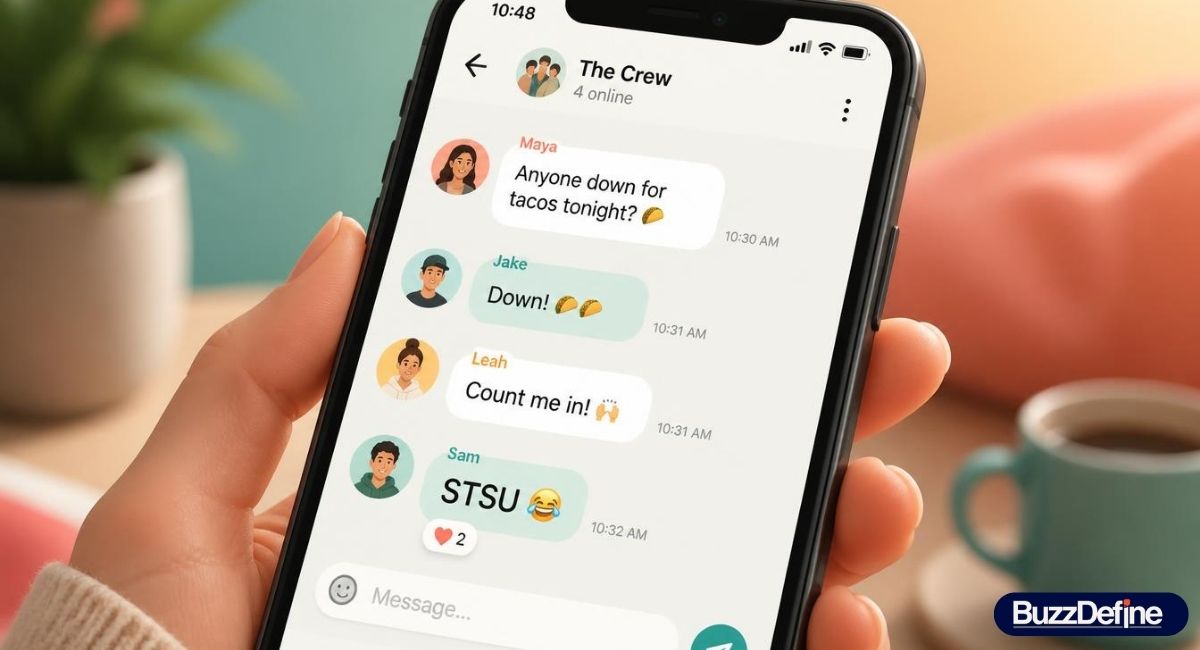
You’re scrolling through a group chat, and someone drops “STSU 😂” out of nowhere. No context, no explanation, just four letters staring back at you. So you do what everyone does: you open a new tab and search for the STSU meaning in text.
Here’s the good news: you’re about to get a clearer answer than most people find. This internet slang term isn’t a one-size-fits-all texting abbreviation.
Its meaning shifts depending on who’s texting, what platform they’re on, and whether there’s a laughing emoji attached or not.
This guide breaks down every documented meaning of STSU, where this chat slang actually came from, and exactly how to use or respond to it without sounding out of touch.
Quick Answer Box
STSU meaning in text: it usually stands for “Shut The Stuff Up” — a softened, less aggressive version of a much stronger phrase. In everyday texting and social media slang, it’s used to react to something surprising, annoying, or funny, and its tone can range from playful to genuinely rude depending on context. Less common alternate meanings, like “Stop Talking, Shut Up” or “Stay True, Stay You,” do exist, but they’re far less widespread than the primary definition.
All Possible Full Forms Table
STSU doesn’t have one official definition, and that’s exactly why so many people search for it. Here’s every documented expansion, ranked by how often each one actually shows up in real conversations.
| Full Form | Popularity | Context |
| Shut The Stuff Up | 55% | The most common version. Used to react to shocking, annoying, or funny messages. |
| Shut That/The Shit Up (censored) | 25% | An uncensored variant some users type when they don’t want to use the harsher word directly. |
| Stop Talking, Shut Up | 12% | A more literal reading, often used during arguments or when someone keeps interrupting. |
| Stay True, Stay You | 3% | A positive, encouraging alternative that shows up occasionally in supportive comments or captions. |
| Send That Same Update | 2% | A workplace or group project shorthand, rarely used outside professional chats. |
| Standard To Some Users | 2% | An older, less common expansion tied to early internet forums rather than casual texting. |
| Statistical/technical acronym | 1% | Appears in unrelated fields (data, institutions) and has nothing to do with texting slang. |
The takeaway: if you see STSU in a casual chat, it’s almost always the “Shut The Stuff Up” family of meanings. Anything else is rare enough that context will usually make it obvious.
Origin & History
STSU doesn’t have a single documented birthdate, but its roots trace back to the same era that gave us LOL, BRB, and STFU.
Early 2000s (2003 to 2008): Long before texting was the default, people were typing shorthand on AOL Instant Messenger and MSN Messenger. Abbreviating harsh phrases into something typable was common practice, and STFU already had a strong foothold.
STSU appears to have grown as a milder cousin, first showing up in Urban Dictionary entries dated 2005 and later expanded on in 2008, where one submission described it as a “sister to STFU.”
2009 to 2015: As texting moved from flip phones to smartphones, character limits stopped mattering as much, but shorthand culture had already taken hold. STSU stayed niche during this period, mostly used in gaming chats and early social platforms rather than mainstream texting.
2016 to 2022: Social media comments and DMs became the new home for internet slang. STSU started appearing in Instagram and Snapchat conversations, often softened with emojis to keep the tone light.
2023 to 2026: TikTok comment sections and Discord servers gave STSU a second wind. Gen Z users picked it up as a quick reaction to jokes, flexes, or debates, and it’s now common enough that it regularly gets searched, even though it still isn’t as standardized as terms like LOL or BRB.
The bottom line: STSU has been around for close to two decades, but it never became mainstream in the way STFU did. That’s part of why its meaning still feels a little fluid today.
STSU Meaning by Platform
Where you see STSU can tell you almost as much as the message itself.
| Platform | Typical Tone | How It’s Used |
| Playful to mildly annoyed | Common in comments and DMs, usually reacting to a post or story | |
| Snapchat | Mostly playful | Often paired with laughing emojis to keep things light |
| Varies by group | Casual in friend groups, but can turn serious in family or work chats | |
| TikTok | Playful, sometimes sarcastic | Shows up in comment sections reacting to videos or debates |
| Discord/Gaming | Banter, competitive teasing | Used constantly during matches and voice chats |
STSU on Discord and in Gaming Chats
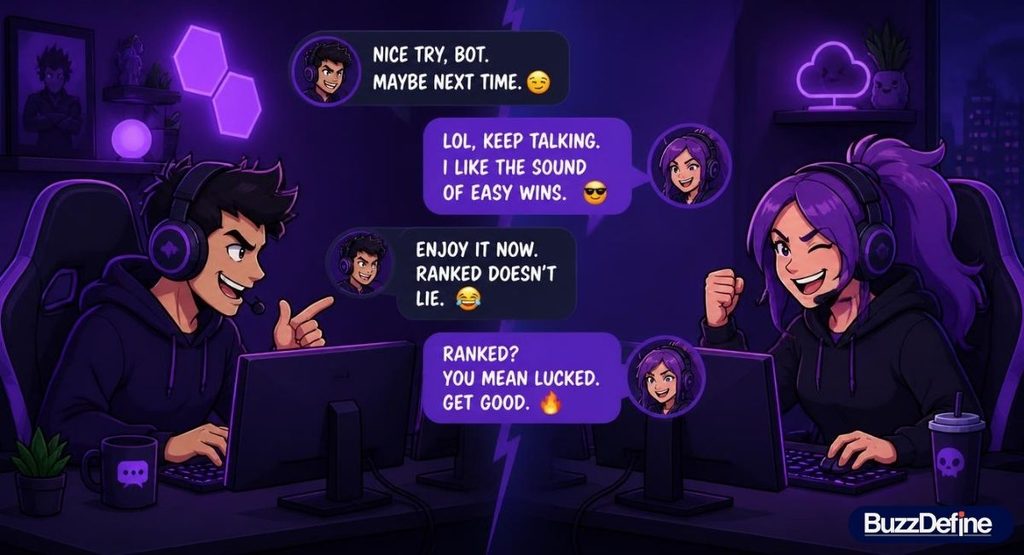
Gaming communities use STSU more than almost anywhere else, and the tone here is its own thing entirely.
In a Discord server or during a match, STSU usually isn’t an insult. It’s banter. Someone brags about a play, gets called out for a mistake, or makes a bold claim about beating another player, and STSU becomes the go to clapback.
Example:
Player 1: “I’d destroy you in a 1v1 easy.”
Player 2: “STSU, you can’t even aim.”
In these spaces, thick skin is part of the culture. If STSU shows up after a rough match or a wild claim, it’s rarely meant to actually offend. That said, tone still shifts with the relationship. Between friends, it’s a joke. Sent to a random teammate you’ve never spoken to, it can land differently.
Gender Based Usage: Guy vs Girl
STSU doesn’t have a strict gender divide, but usage patterns do show up in casual observation of chats and comment sections.
When guys use STSU, it tends to lean competitive or joking, especially in gaming or sports related conversations. It’s often a reaction to bragging, trash talk, or an exaggerated claim.
Example:
“I’d finish that whole pizza in one sitting.”
“STSU, you couldn’t even finish half of it last time.”
When girls use STSU, it more often shows up as a reaction to surprising news, gossip, or something funny, closer to an exaggerated “no way” than an actual command to stop talking.
Example:
“Guess who just got asked out.”
“STSU 😭 tell me everything.”
Neither pattern is a hard rule. Plenty of overlap exists, and the deciding factor is almost always the relationship and platform rather than gender itself.
Tone Based Usage: Playful, Serious, and Sarcastic
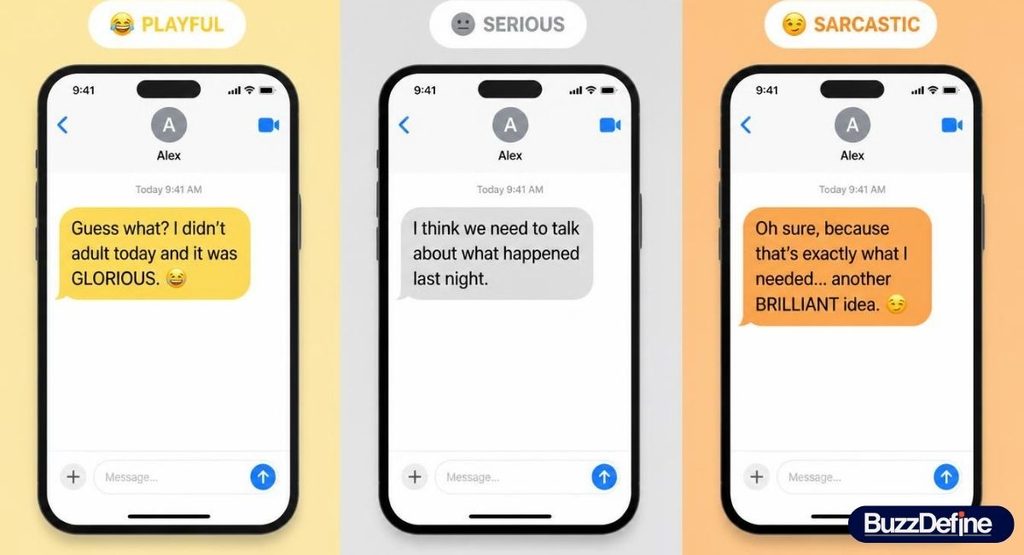
Tone is the single biggest factor in understanding what STSU actually means in any given message.
Playful STSU
Used between close friends, often with an emoji attached. It signals disbelief, excitement, or teasing rather than any real request to stop talking.
Example:
“I just booked a flight to Bali.”
“STSU 😂 no way, since when?”
Serious STSU
Used without emojis, often in the middle of tension or an argument. Here, it’s a direct and somewhat rude way of asking someone to stop talking.
Example:
“You never listen to what I’m actually saying.”
“STSU. I’m done with this conversation.”
Sarcastic STSU
Used to mock or dismiss something someone said, often when the sender doesn’t believe them.
Example:
“I ran a marathon this morning before work.”
“STSU, you didn’t even wake up before 10.”
Reading the room matters more than the letters themselves. The same four characters can mean amusement, irritation, or disbelief depending entirely on delivery.
Quick Check: Is It Playful or Serious?
Not sure how to read an STSU you just received? Run it through this quick check.
- Is there an emoji attached (😂 😭 🤣)? If yes, it’s very likely playful.
- Did it follow a joke, brag, or surprising claim? That points to playful or sarcastic, not serious.
- Is it in all caps or sent alone with no punctuation? That leans serious.
- Is the conversation already tense or argumentative? If so, treat it as a genuine request to stop.
- Do you know this person well? Close friends lean playful far more often than acquaintances or strangers.
If you answered yes to the first two, you’re almost certainly looking at a joke. If you answered yes to the last two, it’s worth pausing and adjusting your tone.
STSU vs STFU and Other Similar Slang
STSU sits in a crowded field of texting abbreviations. Here’s how it compares.
| Term | Full Meaning | Tone | How Common |
| STSU | Shut The Stuff Up | Playful to rude, depends on context | Uncommon, niche |
| STFU | Shut The F*** Up | Aggressive, direct | Very common |
| IDC | I Don’t Care | Dismissive, casual | Very common |
| OMG | Oh My God | Surprise, shock | Extremely common |
| BRB | Be Right Back | Neutral, practical | Extremely common |
| SMH | Shaking My Head | Disapproval, disbelief | Very common |
The key difference between STSU and STFU is intensity. STFU is blunt and almost always aggressive. STSU is softer, more ambiguous, and far more likely to be a joke than an actual insult.
When to Use STSU (and When Not To)
Good times to use it:
- In casual chats with close friends who understand internet slang
- When reacting to a joke, a brag, or unbelievable news
- In gaming or meme focused group chats where banter is the norm
- Paired with an emoji to keep the tone light
Times to avoid it:
- Professional emails, work Slack channels, or client messages
- Conversations with someone you’ve just met
- Talking to older relatives or people unfamiliar with internet slang
- Any moment where the other person is genuinely upset and needs to be heard, not shut down
When in doubt, the safest rule is simple. If you wouldn’t say the full phrase out loud to that person, don’t send the abbreviation either.
How to Respond to STSU
Getting an STSU can feel confusing if you’re not sure what the sender meant. Here’s how to handle it depending on the situation.
If it clearly came with a laughing emoji: Just laugh along or reply with something equally casual. A simple “lol I know right” keeps the tone matching.
If it came without emojis in an otherwise calm chat: Ask lightly what they meant before assuming the worst. Something like “haha wait, you good?” clears things up fast without escalating anything.
If it shows up during an actual disagreement: Don’t match the energy. Responding calmly, or simply pausing the conversation, works better than firing back. Reacting emotionally to a two word message rarely helps.
If a stranger or new acquaintance sends it: Treat it as a signal to reset the tone of the conversation, especially if it felt dismissive. You’re allowed to just not engage with that kind of message from someone you don’t know well.
The short version: match playful energy with playful energy, and respond to seriousness with calm, not confrontation.
Is STSU Used Worldwide?
STSU shows up wherever English language internet culture reaches, which today means almost everywhere. It’s active in casual chats across the United States, the United Kingdom, Canada, Australia, India, and the Philippines, largely because platforms like Instagram, TikTok, and Discord operate the same way globally.
That said, familiarity with the term varies a lot. Native English speaking Gen Z users tend to recognize it instantly, while non native speakers or older users may need context clues to figure it out.
It’s also far less standardized internationally than terms like LOL or OMG, which have essentially become universal. If you’re texting someone outside your usual friend group or from a different country, it’s worth double checking they know the term before assuming it’ll land the way you intend.
FAQs
What does STSU mean in text?
STSU most commonly means “Shut The Stuff Up,” a softened version of a stronger phrase used to react to something surprising, annoying, or funny.
Is STSU a common texting abbreviation?
Not as common as LOL, BRB, or STFU. It’s more of a niche term that’s gained traction mainly through gaming chats and Gen Z social media use.
Is STSU rude?
It can be, but it depends entirely on tone. Sent with a laughing emoji among friends, it’s playful. Sent flatly during an argument, it reads as rude.
What’s the difference between STSU and STFU?
STFU is a direct, aggressive command to stop talking. STSU is a softer, more ambiguous version that often functions as a joke rather than an insult.
Can STSU mean something positive?
Rarely, some users interpret it as “Stay True, Stay You,” an encouraging phrase, but this usage is far less common than the primary meaning.
Where did STSU come from?
It traces back to early 2000s internet slang culture, with Urban Dictionary entries dating to 2005 and 2008 describing it as a milder relative of STFU.
Is STSU used on Discord and in gaming?
Yes, heavily. It’s one of the most common places to see the term, usually used as playful trash talk between players.
Do guys and girls use STSU differently?
There’s a loose pattern. Guys tend to use it competitively, especially around gaming or bragging. Girls tend to use it more as an exaggerated reaction to surprising news or gossip. Plenty of overlap exists either way.
Should I use STSU with someone I just met?
It’s better to avoid it. Without an established relationship, the tone can easily be misread as rude or aggressive.
Can STSU be a typo?
Yes, in some cases it may simply be a mistyped version of another abbreviation rather than intentional slang.
Is STSU used outside the United States?
Yes, it appears in English speaking online communities worldwide, though recognition of the term varies more internationally than with terms like LOL or OMG.
How do I know if someone is joking when they send STSU?
Look for emojis, the context of the conversation, and your relationship with the sender. A laughing emoji after a joke almost always signals playful intent.
What should I do if someone sends STSU seriously?
Stay calm, avoid escalating, and consider addressing the tone directly rather than reacting emotionally to a short message.
Is it okay to use STSU at work?
No, it’s best kept to casual conversations with friends. It can easily come across as unprofessional or confusing in a work setting.
Does STSU have any other meanings outside texting slang?
Yes, in unrelated contexts it can stand for technical or institutional terms, but these have nothing to do with its use in casual chats.
Conclusion
STSU meaning in text is proof that a handful of letters can carry a surprising amount of nuance. Most of the time, it’s a softened stand in for “Shut The Stuff Up,” used to react to something funny, shocking, or mildly annoying rather than as a genuine demand for silence.
The real skill isn’t memorizing the definition, it’s reading the room: the platform, the emoji, the relationship, and the conversation happening around it.
Now that you’ve got the full picture of the STSU meaning in text, from its origins on early messaging apps to how this internet slang plays out differently on Discord versus Instagram, you’ll never have to guess what this texting abbreviation means again.

Muhammad Kaleem is the founder and lead writer at BuzzDefine, where he covers internet slang, texting abbreviations, and digital communication trends. He actively follows how language evolves across WhatsApp, Instagram, and TikTok — tracking real conversations, group chats, and comment threads to keep definitions accurate and current. He writes to make modern slang easy to understand for readers of every generation.