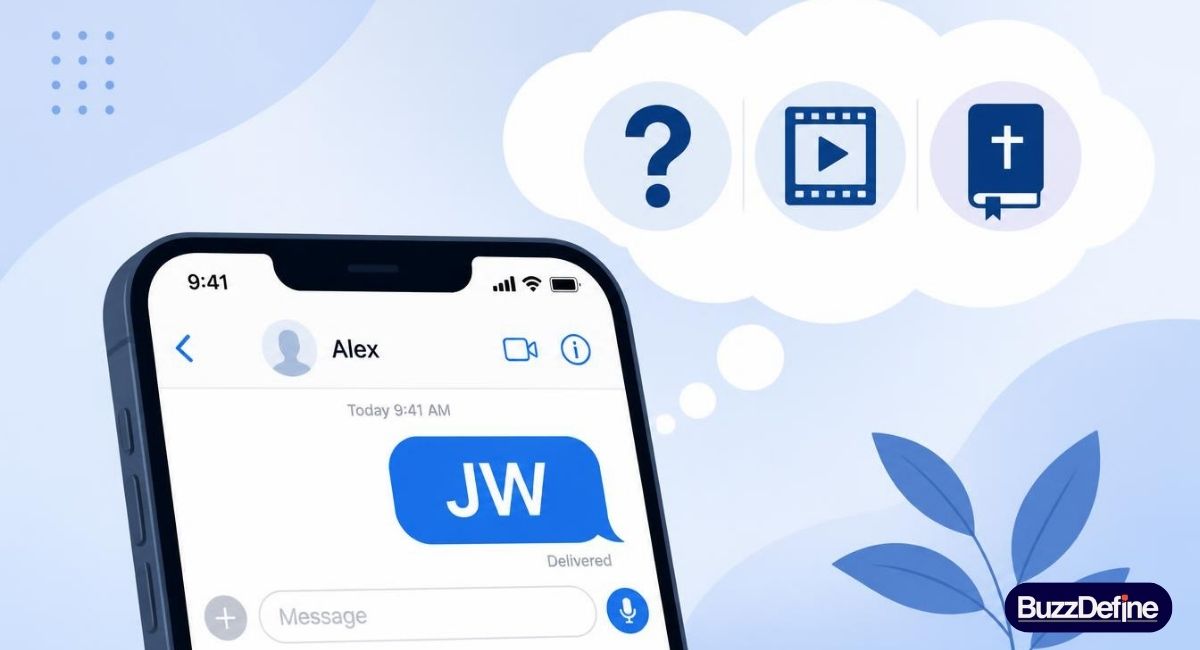
Seen “JW” pop up in a text and paused for a second? You’re not alone, it’s one of those short forms that seems simple until you actually try to figure out what does jw mean in text message.
Most of the time it’s harmless, but the meaning shifts depending on who’s texting and what the conversation’s about.
This guide breaks down exactly what does jw mean in text message, plus the other meanings JW can carry across Snapchat, Instagram, WhatsApp, and more.
By the end, you’ll know the JW meaning in text instantly, no more second-guessing what someone’s actually asking.
What does JW mean in text?
JW most commonly means “Just Wondering” in text messages. People add it before or after a question to keep things casual and low-pressure, it signals curiosity without expecting an urgent or detailed reply. Depending on context, JW can also mean “Just Watched,” “Just Waiting,” or “Jehovah’s Witnesses.”
JW Meaning at a Glance
JW isn’t a one-meaning abbreviation. What it stands for depends almost entirely on where you see it and what the conversation is about. Here’s a quick breakdown before we get into each one in detail.
| Meaning | Context | Example |
| Just Wondering | Casual texting, DMs | “JW if you’re free tonight?” |
| Just Watched | Movie/TV/entertainment chats | “JW that new episode — wow.” |
| Just Waiting | Group chats, waiting on someone/something | “JW for you to reply lol.” |
| Jehovah’s Witnesses | Religious or organizational context | “She’s a JW, so she doesn’t celebrate birthdays.” |
| Job Well-done | Rare, workplace/gaming slang | “JW team, we hit the deadline.” |
| Just Woke (up) | Occasional, morning texts | “JW, give me 10 mins.” |
Nine times out of ten, if you’re texting a friend and JW shows up in a casual question, it means Just Wondering. The other meanings only take over when the surrounding context makes it obvious.
JW = Just Wondering (Primary Meaning)
JW most often means “Just Wondering.” It’s added to a question to keep the tone light, so the other person doesn’t feel pressured to answer right away or explain themselves.
Why People Use JW Instead of Asking Directly
A direct question can feel like a demand. “Why didn’t you text back?” sounds accusing. Add JW and it softens instantly: “Why didn’t you text back? JW.” Now it reads as curiosity, not confrontation.
People use JW to protect the relationship. It signals “I’m not upset, I’m not pushing, I just want to know.” This matters most in new relationships, group chats, or with someone you don’t want to seem clingy or intense with.
8+ Real Text Examples
- “JW if you saw my message.”
- “Are you still coming tonight? JW.”
- “JW what time works for you.”
- “Did you talk to her yet? JW.”
- “JW if you’re mad at me.”
- “Hey, JW how the interview went.”
- “JW if you want to grab coffee later.”
- “You good? JW, you’ve been quiet today.”
- “JW what you thought of the show.”
How to Reply to a JW Text
Since JW lowers the pressure, your reply can match that energy. Answer simply and honestly. If you don’t want to answer, it’s fine to say so without over explaining.
Good replies:
- “Yeah, all good! JW why you ask?”
- “Not yet, will let you know.”
- “Nah I’m actually free, what’s up?”
Avoid overthinking a JW text. It’s usually genuine curiosity, not a hidden test.
Other Meanings of JW
JW = Just Watched
In movie, show, or video discussions, JW often means “Just Watched.” It’s a quick way to react to something you finished seeing.
Example: “JW the finale, I’m speechless.”
JW = Just Waiting
Less common, but you’ll see it in group chats when someone’s stalling on a reply or an update.
Example: “JW on you to confirm the plan.”
JW = Jehovah’s Witnesses
In religious or organizational conversations, JW refers to Jehovah’s Witnesses, often tied to their site JW.org.
Example: “He grew up JW, so he doesn’t do holidays.”
JW = Job Well-done (Rare)
Occasionally used in casual workplace or gaming chats as quick praise.
Example: “JW team, we shipped it on time.”
JW Meaning by Platform
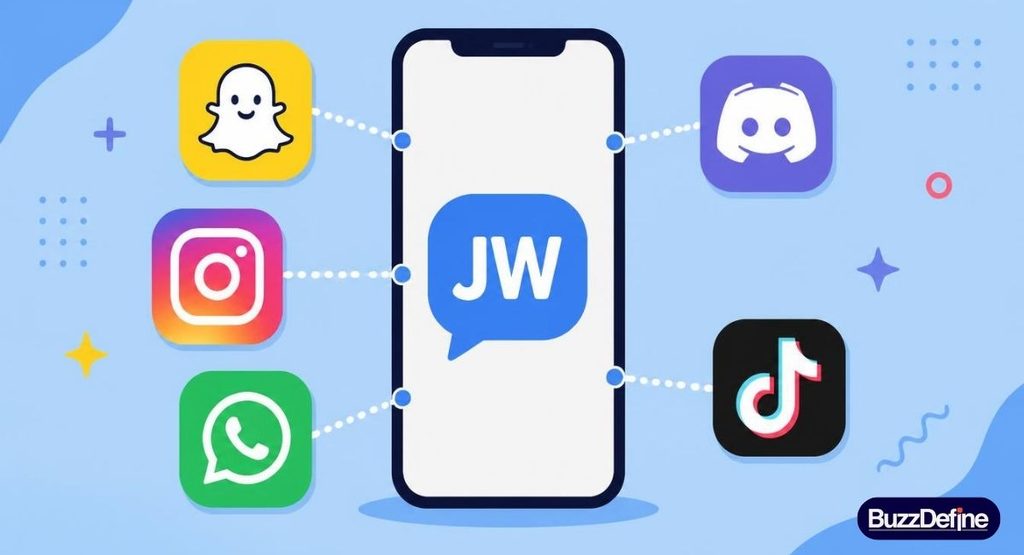
JW’s meaning stays fairly consistent across apps, but tone and usage shift a little depending on where you see it.
JW on Snapchat
On Snapchat, JW almost always means “Just Wondering.” It shows up in snap captions or chat replies as a casual way to ask something without expecting an instant answer.
Example: “JW if you’re still up for later.”
JW on Instagram/DMs
In Instagram DMs and comments, JW means “Just Wondering” too, often used to slide into a question after liking or replying to a story.
Example: “JW, did you post that on purpose lol.”
JW on WhatsApp
WhatsApp usage leans more personal since it’s often close friends or family. JW here softens questions that might otherwise feel like checking in too much.
Example: “JW if you landed safe.”
JW on Discord/Gaming Chats
In Discord and gaming chats, JW can mean “Just Wondering,” but “Job Well-done” also shows up more here than anywhere else, especially after a match or raid.
Example: “JW gg, that clutch was insane.”
JW on TikTok Comments
In TikTok comments, JW leans toward “Just Wondering” or “Just Watched,” depending on whether the comment is a question or a reaction to the video.
Example: “JW how you edited this transition.”
H2: How to Tell Which Meaning JW Has
Context gives it away almost every time. Ask yourself these quick questions:
- Is it attached to a question? It’s probably “Just Wondering.”
- Is the chat about a movie, show, or video? It likely means “Just Watched.”
- Is someone waiting on a reply or update? It could mean “Just Waiting.”
- Is the topic religion, faith, or beliefs? It’s probably “Jehovah’s Witnesses.”
- Is it in a work or gaming chat after finishing something? It might mean “Job Well-done.”
| If the message… | JW likely means |
| Ends a casual question | Just Wondering |
| Follows a movie/show topic | Just Watched |
| Appears while someone’s stalling | Just Waiting |
| Comes up in a religious discussion | Jehovah’s Witnesses |
| Follows a completed task at work/gaming | Job Well-done |
JW vs Similar Texting Abbreviations
JW isn’t the only softener people use in texts. Here’s how it compares to other common ones.
| Abbreviation | Meaning | Tone | Example |
| JW | Just Wondering | Curious, low pressure | “JW if you’re coming?” |
| BTW | By The Way | Informative, casual | “BTW, I saw your post.” |
| FYI | For Your Information | Neutral, informative | “FYI, meeting moved to 4.” |
| IDK | I Don’t Know | Uncertain | “IDK what happened.” |
| LMK | Let Me Know | Requesting a reply | “LMK when you’re free.” |
JW stands apart because it’s specifically built to soften a question, not deliver information or request a response. LMK expects a reply, JW doesn’t.
Can JW Be Sarcastic?
Yes. JW can carry a sarcastic edge, especially when the “casual” tone is exaggerated on purpose.
Example: “JW why you never text back 🙄”
Here, the sender isn’t actually just curious. The JW is doing the opposite of its usual job, adding sting instead of softening it.
You can usually tell from punctuation, emojis, or the relationship context. A flat “JW” in a normal chat is genuine. A “JW” followed by an eye roll emoji or all caps is not.
When to Use JW — And When to Avoid It
| Context | Use JW? |
| Texting a friend | Yes, natural and common |
| Social media comment | Yes, widely understood |
| Group chat | Yes, casual and easy |
| Talking to a crush or new match | Yes, keeps things low pressure |
| Work Slack or internal chat | Only if the culture is casual |
| Formal email | No |
| Academic or official writing | No |
| Customer service messages | No |
Rule of thumb: if the conversation is relaxed and personal, JW fits. If it needs to sound professional or precise, spell it out instead.
Origin & History of JW
JW grew out of the same texting shorthand era as LOL, BRB, and IDK, back when SMS had character limits and typing speed mattered. “Just Wondering” was a natural phrase to shorten since it’s common but a little long to type out every time.
As messaging moved from SMS to apps like WhatsApp, Instagram, and Discord, JW carried over and picked up extra meanings along the way, shaped by whatever platform or community was using it. That’s why its meaning today depends so much on context rather than one fixed definition.
FAQs
What does JW mean in text?
JW most commonly means “Just Wondering.” It’s used to ask a casual question without sounding pushy or demanding a quick reply.
What does JW mean on Snapchat/Instagram?
On both platforms, JW almost always means “Just Wondering,” used in captions, comments, or DMs to ask something lightly.
Is JW always “just wondering”?
Not always, but it’s the most common meaning by far. Other meanings like “Just Watched” or “Jehovah’s Witnesses” only apply when the context clearly points that way.
Can JW be sarcastic?
Yes. When paired with an exaggerated tone, emojis, or caps, JW can flip from genuine curiosity to sarcasm.
What does JW mean from a girl/guy?
The meaning doesn’t change based on gender, it’s about context, not who’s sending it. From anyone, JW in a casual question still means “Just Wondering.”
How do you reply to JW?
Answer normally and honestly. Since JW lowers the pressure, a short, casual reply is enough, no need to overexplain.
Is JW rude to use?
No, it’s the opposite. JW is meant to soften a question and make it feel less demanding or intense.
What’s the difference between JW and JFW?
JW means “Just Wondering.” JFW usually means “Just For Wondering” or “Just Feeling Weird,” depending on the chat, it’s far less common and more ambiguous than JW.
Conclusion
JW is a small abbreviation that does a lot of work in a conversation. Most of the time it means “Just Wondering,” softening a question so it doesn’t feel like pressure. But depending on the chat, it can also mean “Just Watched,” “Just Waiting,” or even “Jehovah’s Witnesses.”
Context is really all you need. Look at what’s being discussed, who’s texting, and how the message is written, and the meaning becomes obvious every time.
Read Next: DTTM Meaning in Text: What It Really Stands For (2026)

Muhammad Kaleem is the founder and lead writer at BuzzDefine, where he covers internet slang, texting abbreviations, and digital communication trends. He actively follows how language evolves across WhatsApp, Instagram, and TikTok — tracking real conversations, group chats, and comment threads to keep definitions accurate and current. He writes to make modern slang easy to understand for readers of every generation.