Yuh meaning: “Yuh” is a slang spelling of “yeah” or “yes.” People use it to agree, confirm, or react with extra attitude, from chill agreement to hyped excitement. It started in AAVE and Southern dialects, then spread through pop culture. In Jamaican Patois, “yuh” means something different: “you.”
Your phone buzzes. You sent a whole paragraph explaining your day, and all you get back is “yuh.” Now you’re stuck staring at the screen, trying to figure out what it means.
Is your friend mad? Bored? Hyped? You can’t tell from one word alone.
This happens to almost everyone. Slang moves fast, and a plain “yes” just doesn’t cut it anymore for a lot of texters. That’s exactly why so many people search for the yuh meaning every day.
Good news: once you understand the yuh meaning in texting, you’ll never second guess a reply again. It’s simpler than it looks, and this guide breaks down every angle of it.
What Does Yuh Mean?
Yuh means “yes” or “yeah.” It’s a casual, stylized way to agree with someone, confirm a plan, or react to good news. That’s the short answer, and it covers most of what you’ll see in texts and comments.
But the yuh definition isn’t just a flat “yes.” The tone changes everything.
Say your friend asks if you want pizza. A reply like “yuh absolutely” carries excitement and energy. Now picture someone annoyed, typing “yuh whatever.” Same word, completely different mood.
That’s the real trick with this slang term. “Yuh” doesn’t come with fixed emotion built in. You read the tone from the words around it, the punctuation, or even the emoji attached to it.
Here’s how the yuh slang meaning shifts depending on context:
- Agreement: “Yuh, that works for me.”
- Excitement: “Yuh let’s go!”
- Sarcasm: “Yuh, sure it will.”
- Dismissive: “Yuh whatever.”
So when someone asks does yuh mean yes, the answer is almost always yes, just delivered with more personality than a plain “yes” or “yeah” ever could.
Yuh in Jamaican Patois (= You)
Here’s a twist most guides skip. In Jamaican Patois, “yuh” doesn’t mean yes at all. It means “you.”
So “Yuh serious?” translates to “Are you serious?” not “Yes, seriously.” Same spelling, totally different job in the sentence.
This matters because Patois has shaped a lot of Caribbean influenced slang online, and the word crosses paths with the American texting version constantly. If you see “yuh” in a caption or comment with Caribbean roots, check the sentence structure before you assume it means agreement.
A quick way to tell them apart:
- “Yuh” as yes: stands alone or opens a reply. “Yuh, I’m coming.”
- “Yuh” as you: replaces a name or pronoun in the sentence. “Is yuh coming?” means “Is you coming?”
Context decides everything here. Miss this distinction, and you’ll misread the message completely.
Origin & History
The yuh slang origin goes back further than the internet. It didn’t start as a typed word. People were saying it long before they were texting it.
“Yuh” grew out of African American Vernacular English (AAVE) and Southern American dialects, where “yeah” often gets shortened and softened in everyday speech. Over time, that natural pronunciation turned into its own casual spelling.
From there, everyday conversation carried it into pop culture and eventually social media captions and comments. Once people started seeing it written out online, they picked it up fast because it matched how they already talked.
That’s the short history of yuh: a spoken habit that became a written trend. The core meaning never really changed. What changed was where you see it, now it shows up in texts, captions, and comments as much as it does in casual conversation.
According to general slang references like Urban Dictionary, this pattern (a spoken dialect form becoming standard internet slang) is common with a lot of Gen Z texting terms, not just this one.
Pronunciation Guide
“Yuh” is pronounced like “yuh” rhymes with “duh” or “huh.” Say the short “u” sound from “up,” then close it off quick with an “h.”
It’s one syllable, said fast and flat, not stretched out like “yeah.”
Quick breakdown:
- Sounds like: yuh (rhymes with “duh”)
- Not like: “you” or “yoo”
- Extra emphasis: “yuhh” or “yuhhh” stretches the vowel slightly for more hype
That’s it. No tricky phonetics here, just say it the way it looks.
Platform-Wise Usage Table
How you see yuh in social media changes slightly by app. Here’s how it shows up across the platforms people search for most:
| Platform | Common Use | Tone | Example |
| TikTok | Reacting to trending audios and comments | Hyped | “Yuh this sound goes hard.” |
| Hyping up selfies or posts in comments | Supportive | “Yuh you look amazing.” | |
| Snapchat | Quick replies to snaps | Casual | “Yuh I’m down.” |
| Discord | Confirming plans mid game | Focused | “Yuh I got you covered.” |
| Agreeing in comment threads | Casual | “Yuh that happened to me too.” | |
| Twitter/X | Backing a popular opinion in replies | Confident | “Yuh this take is correct.” |
Yuh on TikTok tends to run the most exaggerated, since audio trends push people toward extra letters like “yuhhh.
” Yuh on Instagram and yuh on Snapchat stay closer to normal conversation. Yuh on Discord and yuh on Reddit lean more functional, it’s less about hype and more about a fast yes.
Regional Differences Table
The word doesn’t hit the same everywhere. Region changes how often you’ll hear it and what it actually means.
| Region | Usage | Meaning | Notes |
| United States | Very common, mostly Gen Z | Yes/yeah | Strongest presence in texting and social media |
| United Kingdom | Less common | Yes/yeah | People recognize it but often prefer “yeah mate” or “true that” |
| Australia | Uncommon | Yes/yeah | Rarely used casually, more of an imported internet term |
| Caribbean (Jamaica) | Very common | You | Different meaning entirely, part of Patois grammar, not agreement slang |
So if you’re texting someone from Jamaica, don’t assume “yuh” means yes. Everywhere else it usually does, but Caribbean Patois flips the meaning completely.
Examples by Tone
Yuh examples in text change completely depending on the mood behind them. Here’s yuh in a sentence across five common tones:
Casual
- “Yuh I can pick you up at eight.”
- “Yuh sounds good to me.”
Excited
- “Yuh let’s go!”
- “Yuhhh we’re doing this!”
Sarcastic
- “Yuh sure, that’ll work out great.”
- “Yuh because that always goes well.”
Flirty
- “Yuh you looked really good today.”
- “Wearing my hoodie? Yuh I am.”
Dismissive
- “Yuh whatever.”
- “Yuh, okay.”
Same word, five completely different vibes. The tone lives in the words around it, not the “yuh” itself.
How to Reply to Yuh
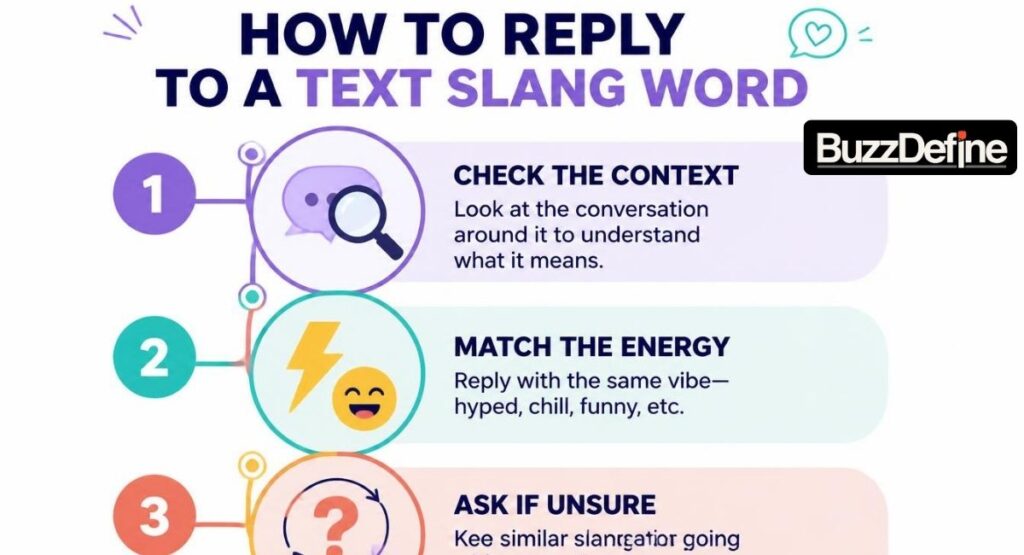
Getting a plain “yuh” back can feel confusing, especially in a longer conversation. Here’s how to handle it depending on the situation.
- Check the context first. Look at what you sent right before. A quick question deserves a quick “yuh,” so don’t overthink it.
- Match the energy. If they replied “yuhhh” with extra letters, they’re hyped. Reply with the same enthusiasm or an emoji.
- Ask if it feels dismissive. If you sent something important and got a flat “yuh,” a simple “you good?” clears up the confusion fast.
- Mirror it back. When in doubt, replying “yuh” works too. It keeps the tone casual and matches their vibe.
- Add a follow up if you need more. A one word reply doesn’t always give you enough. Ask a direct follow up question if you need details.
The goal isn’t to overanalyze one word. Read the pattern of the conversation, not just the reply itself.
Yuh vs Similar Slang
“Yuh” isn’t the only casual way to say yes. Here’s how it stacks up against other slang terms people mix up with it.
| Term | Meaning | Example |
| Yuh | Yes/yeah, casual with attitude | “Yuh, I’m coming.” |
| Ye | Shorter, quieter version of yeah | “Ye, sounds fine.” |
| Bet | Yes, agreed, or accepting a challenge | “Bet, see you at 8.” |
| Fs | For sure | “Fs, I’m in.” |
| Yessir | Loud, hyped yes | “Yessir, let’s go!” |
| Fosho | For sure, confident agreement | “Fosho I’ll be there.” |
| Totes | Totally, casual agreement | “Totes agree with that.” |
| Fr | For real, emphasizing sincerity | “Fr, that’s true.” |
Yuh vs yeah: “Yeah” is neutral and plain. “Yuh” carries more attitude and energy.
Yuh vs yes: “Yes” sounds formal. “Yuh” is strictly casual, you won’t use it in a serious email.
Yuh and bet meaning: Similar energy, but “bet” usually confirms plans or accepts a challenge, while “yuh” is just general agreement.
Is Yuh Safe for Kids?
Yes, “yuh” is completely safe for kids. It’s just a casual way to say yes, nothing hidden or inappropriate behind it.
It’s not an acronym, and it doesn’t stand for anything harmful. Kids pick it up from TikTok and friends because it sounds more modern than a plain “yes.”
The only thing worth watching for is tone, not the word itself. A mumbled “yuh” when you ask a kid to clean their room can sound a bit dismissive. But that’s attitude, not the word being dangerous. Teachers might correct it in formal writing, but there’s nothing to worry about in casual texts or conversation.
When to Use / Avoid
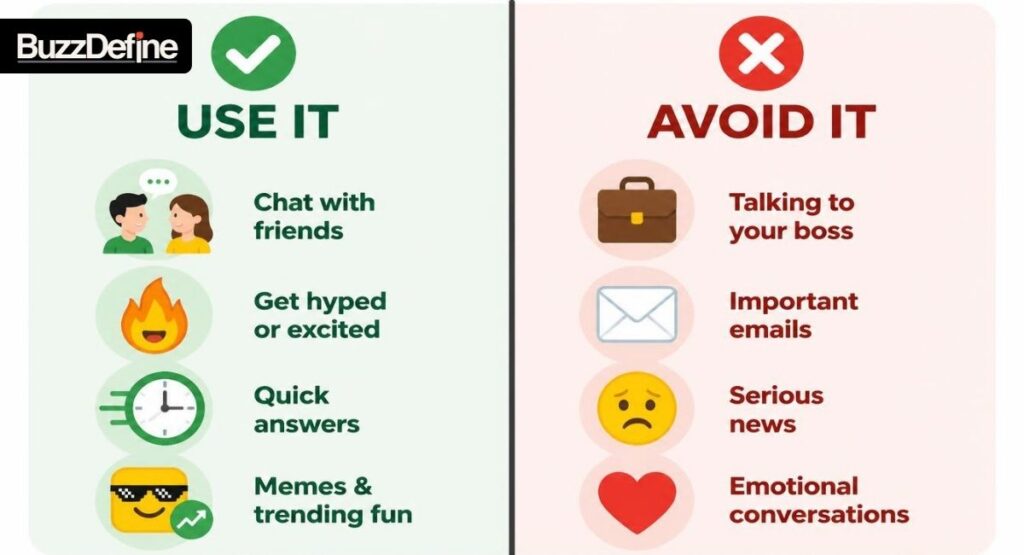
Use it when:
- You’re agreeing with a close friend in a casual text
- You want to hype someone up in a comment
- You’re replying fast while busy
- You’re quoting a trend or meme
Avoid it when:
- You’re texting your boss or a teacher
- You need to sound professional in an email
- Someone’s sharing serious or sad news
- You’re having a deep, emotional conversation
Simple rule: if you wouldn’t text your boss “yeah” casually, don’t text them “yuh” either.
FAQs
What does yuh mean in slang?
Yuh means “yes” or “yeah.” It’s a casual, attitude filled way to agree with someone in texting, comments, or everyday conversation.
What does yuh mean from a girl?
It simply means yes or yeah. A girl using “yuh” is casually agreeing with you. It doesn’t automatically mean she’s flirting or annoyed, the rest of the conversation tells you the real tone.
What does yuh mean from a guy?
When a guy texts “yuh,” he’s agreeing too. It’s common in gaming chats and quick replies, and it usually just means a fast, low effort yes.
Is yuh rude?
It can come across as rude, but not always. A flat “yuh” reply to a long, emotional message can feel dismissive. For a quick question, it’s a completely normal and polite response.
Why do people say yuh instead of yes?
People use it because it sounds more relaxed than a formal “yes.” It matches how they actually talk with friends, and it adds personality that a plain “yes” doesn’t have.
Does yuh mean yes or yeah?
Both. “Yuh” works as a stand in for either word, they’re used interchangeably depending on the sentence.
Is yuh the same as bet?
Not exactly. Both show agreement, but “bet” usually confirms a plan or accepts a challenge, while “yuh” is a more general yes.
Is yuh a real word?
It’s not a formal dictionary word, but it’s a widely recognized slang term across texting and social media, similar to other informal spellings like “nah” or “fr.”
Key Takeaways
- Yuh means “yes” or “yeah,” used casually to agree, confirm, or react with extra attitude
- In Jamaican Patois, “yuh” means “you,” not yes, so context matters
- It comes from AAVE and Southern dialects, later spreading through pop culture and social media
- Tone changes everything, the same word can sound hyped, sarcastic, flirty, or dismissive
- Safe for kids, casual for friends, but skip it in professional or serious conversations
Read Next : FRLS Mean in Text: All 3 Meanings Explained (2026 Guide)

Muhammad Kaleem is the founder and lead writer at BuzzDefine, where he covers internet slang, texting abbreviations, and digital communication trends. He actively follows how language evolves across WhatsApp, Instagram, and TikTok — tracking real conversations, group chats, and comment threads to keep definitions accurate and current. He writes to make modern slang easy to understand for readers of every generation.